The cheapest OnlyFans API plan is not always the one with the lowest headline price. Credits, per-call billing, and per-account subscriptions measure different things, so a fair comparison starts with your workload.
This guide gives you a reproducible model. It does not invent competitor totals or assume that every request has equal value.
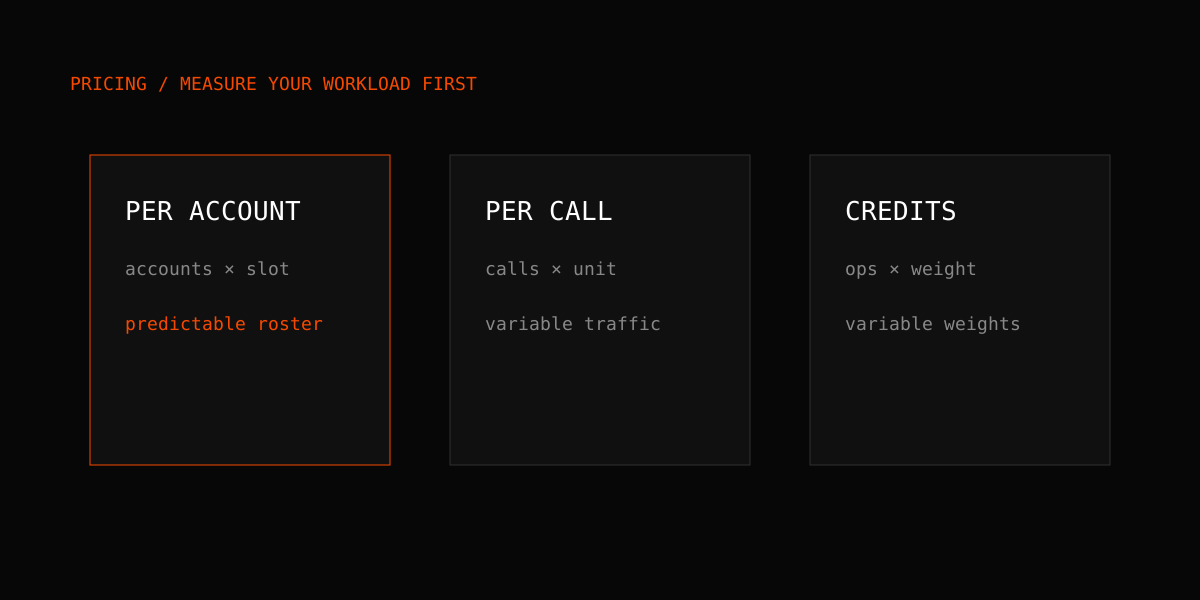
The three common pricing models
Per-account subscription. You pay for each connected creator account. A paid slot is predictable when call volume changes but the account roster is stable.
Credits. Operations consume a provider-defined unit. A simple profile read and a large export may cost different credit amounts. Forecasting depends on a complete credit table and on knowing which operations your workflow will run.
Per-call billing. Each request or bundle of requests is metered. It can suit low-volume use, but aggressive polling or backfills can make spend variable.
Enterprise contracts may combine these models with minimum commitments, dedicated infrastructure, or support fees.
Measure workload before price
Create a one-week trace in a test environment. For each operation, record route template, account, response status, whether the result came from cache, and whether it was initiated by a person, a webhook, or a schedule.
Group the trace into:
- Baseline reads needed to keep the product usable.
- Event-driven reads triggered by real activity.
- Backfills and exports.
- Write operations.
- Retries and failed requests.
Then project three scenarios: a normal month, a growth month, and an incident month with retries or reconnection work.
A transparent cost worksheet
Let A be connected accounts, C be billable calls, Oi be the count of operation i, Wi be its credit weight, and S be fixed support or infrastructure fees.
| Model | Monthly formula | Main uncertainty |
|---|---|---|
| Per account | A × slot price + S | Roster size |
| Per call | C × call price + S | Traffic and retries |
| Credits | Sum of Oi × Wi + S | Operation weights and bundles |
Do not compare an annual commitment with a month-to-month rate without normalizing contract length. Include taxes, overages, minimums, unused-credit expiry, and cancellation terms.
The Only API model
The current public offer has a free plan with one account and 1,000 monthly API calls. Paid slots are priced per connected OnlyFans or Fansly account and are unlimited at the monthly quota layer. The public pricing implementation shows $20 per slot below 15 slots and $15 per slot once the roster reaches 15; the volume rate applies to every slot at that threshold.
Flood protection still applies. Unlimited monthly calls does not mean unlimited concurrency, and it does not remove platform-side safety considerations. The safe polling guide shows how to reduce traffic without sacrificing freshness.
Because packaging can change, treat the live pricing page and checkout as authoritative rather than copying numbers into a long-lived procurement spreadsheet.
Compare features before unit price
A cheap call is not useful if the provider lacks the endpoint or operating feature you need. Include these rows in the decision:
- OnlyFans and Fansly coverage.
- Normalized CRM routes versus raw passthrough.
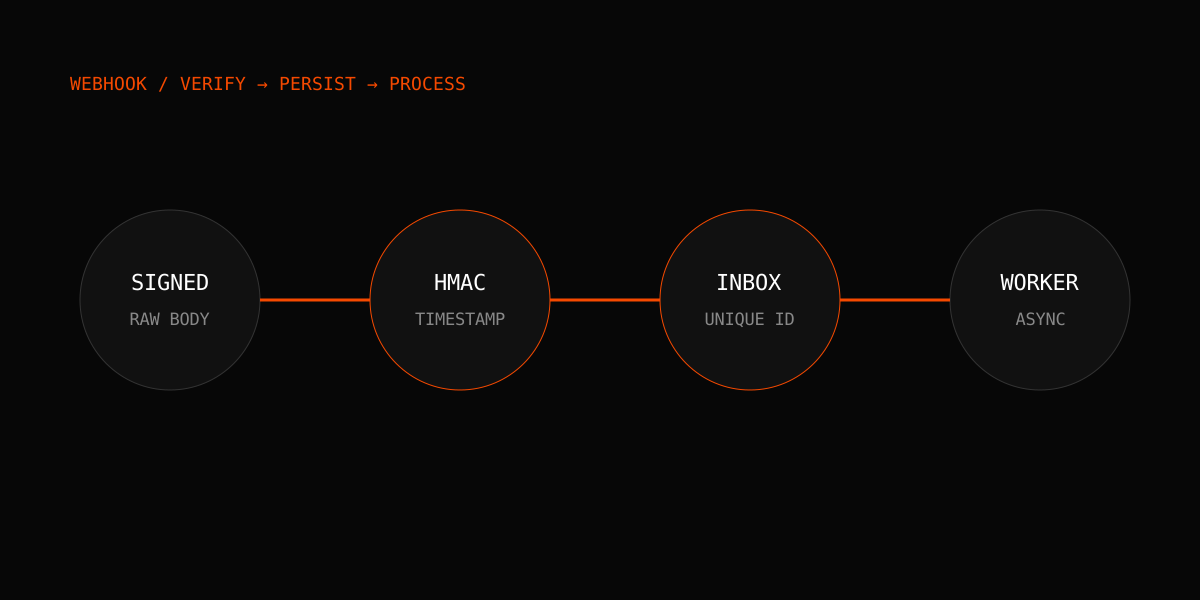
- Webhooks, persisted events, and automation actions.
- Cache-backed reads and export jobs.
- Authentication and 2FA handling.
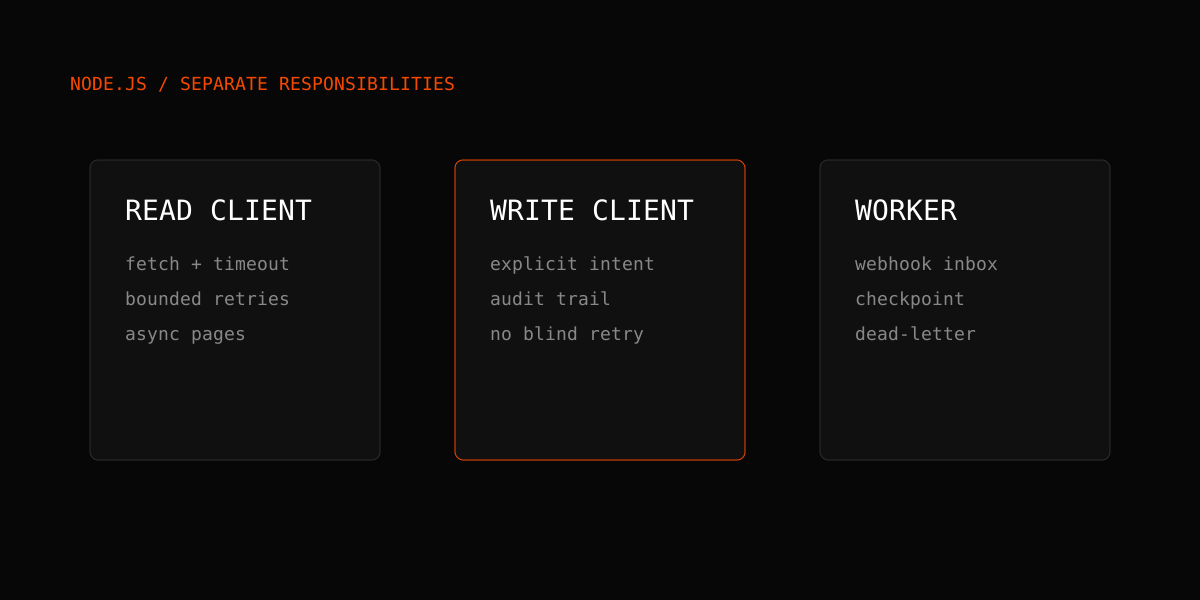
- Write controls, auditability, and tenant isolation.
- SDK examples, OpenAPI, and documentation quality.
- Support response and service commitments.
For an event-driven system, webhooks can remove thousands of repetitive calls from any pricing model. For agencies operating two platforms, the multi-platform CRM architecture can also reduce duplicated infrastructure.
Questions to ask every vendor
- 1.Which operations are metered, and when is a failed request billable?
- 2.Does pagination consume one unit per page?
- 3.Are retries, webhooks, cache reads, exports, and support included?
- 4.Do unused credits expire?
- 5.Is the published rate conditional on a long commitment?
- 6.Are all endpoints available on every tier?
- 7.What technical controls prevent a runaway loop from creating a surprise bill?
- 8.How are account slots counted during reconnects or replacements?
Optimize architecture before negotiating price
The largest savings often come from design changes: consume events, cache shared reads, reconcile at a slower cadence, deduplicate jobs, and pause disconnected accounts. A badly designed poller can make any metered provider look expensive.
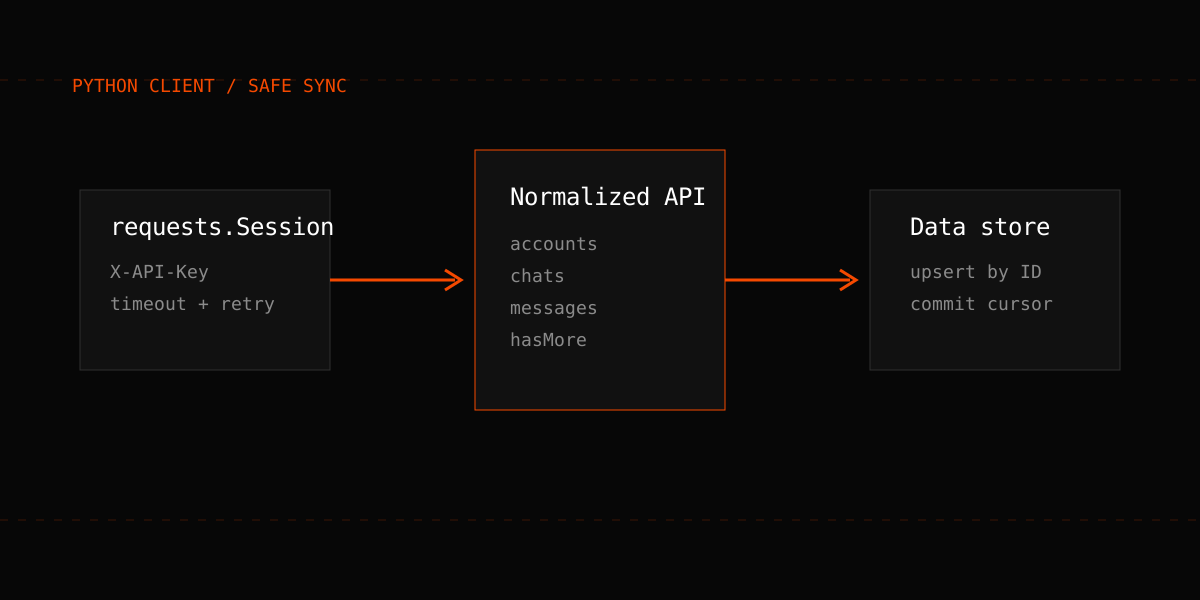
Start with the OnlyFans developer API overview, test a realistic client using the Python tutorial or Node.js tutorial, and verify endpoint behavior in the documentation. A pricing decision is defensible only when the assumptions and workload trace can be reproduced.